All mountain skis
Product 2024
Woman, Man
All mountain skis
Product 2024
Woman, Man
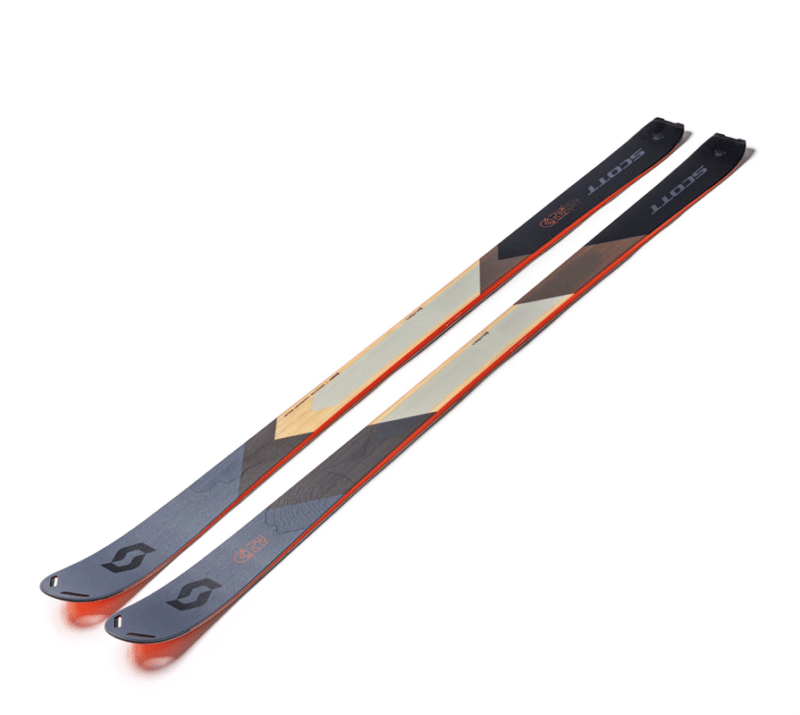
Mixed feelings about the Scott Pure Free 90Ti. The flex is not well-developed, not particularly refined. There’s a very stiff area underfoot that only very powerful skiers can work with. Meanwhile, there’s some flexibility in the structure towards the front.
As soon as pressure is applied to the heel, the Scott Pure Free 90Ti becomes very prone to understeer, leading to straight lines. This phenomenon worsens on hard snow. The solution? Putting the Scott Pure Free 90Ti on a carved edge. In this configuration, it functions, it follows the curve, it grips the edge. However, it’s very difficult to change the radius, as variations are minimal due to its stiffness underfoot. It holds extreme angulations. On slid directional effects, one struggles with this tricky-to-manage tail. You really need to be well balanced and, most importantly, not let yourself get caught on the back, or it’ll go straight. In skidded/slipped turns, it works; you can flatten it, and it pivots.
In terms of weight, the Scott Pure Free 90Ti feels heavy, but in action, thanks to the lightness at the front, you don’t feel much inertia, so it can be considered light. It retains the beautifully designed tip, with nice fiber transparency effects.
A ski that works well in carved turns but whose flex would benefit from more progression, especially underfoot.



We used this equipment over a long period of time
These are our thoughts after intensive use:
Receive your answers by mail. Do you have a particular question concerning the design, use, durability or other about a tested product? We will answer your question personally.