Racing boots
Product 2022
Man
Racing boots
Product 2022
Man

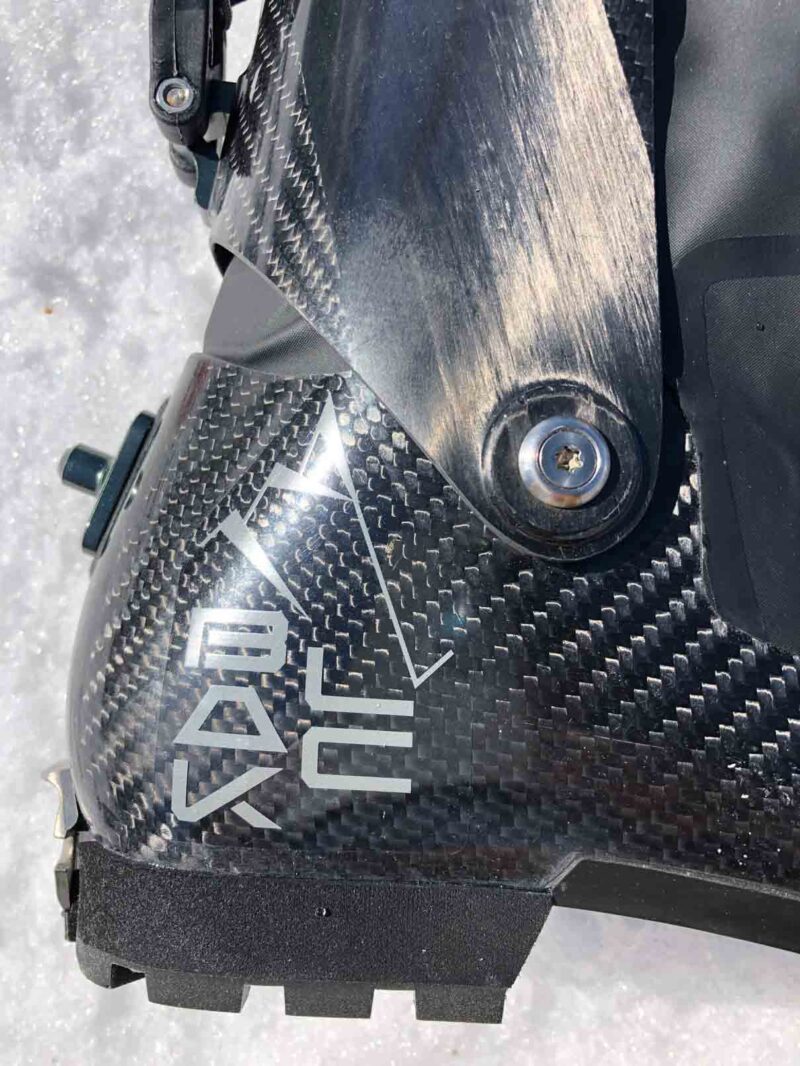
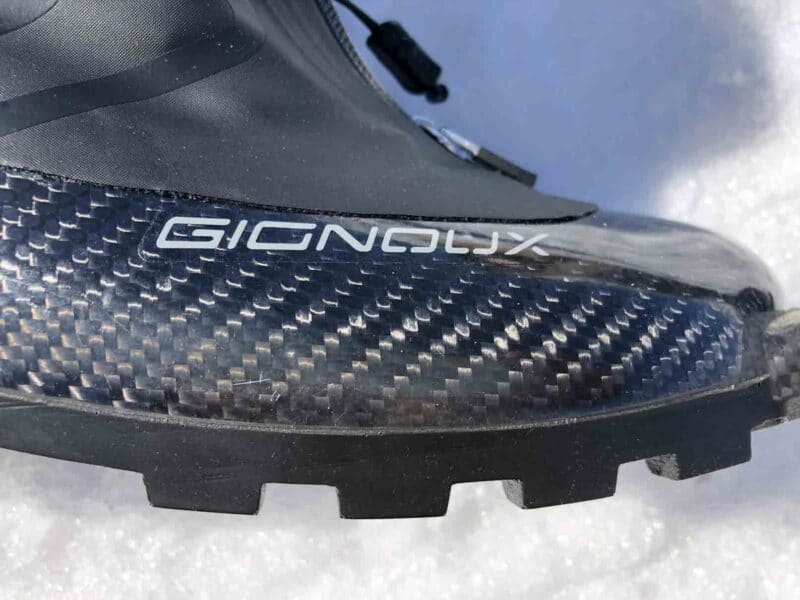
Pierre Gignoux presents this incredible Gignoux Black as a versatile boot capable of competing in ski mountaineering races to perform but also capable of handling elevation gain during ski touring. That’s the theoretical introduction.
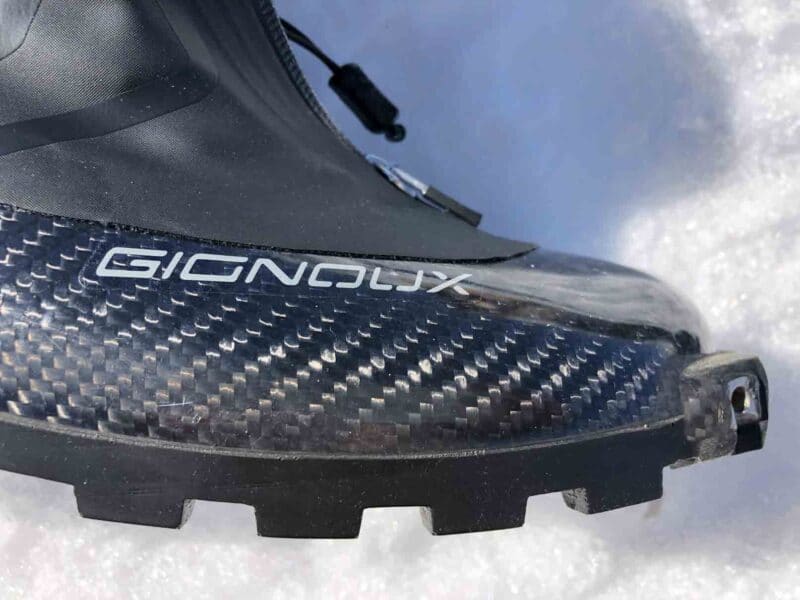
On the snow, we eagerly discover this minimalist product attempting to achieve the maximum. The magnificent ultra-fitted carbon shell immediately catches our eye. Right from the first steps, it becomes apparent that the sole is extremely rigid, a term that fits the Gignoux Black perfectly: there’s no doubt, we’re dealing with an exceptional product, true for the entire incredible range of Gignoux products. The lightest boot, the Race 400, weighs only 500 grams! The Mountain model we also have the pleasure of testing barely tips the scales at 750 grams for high skiability.
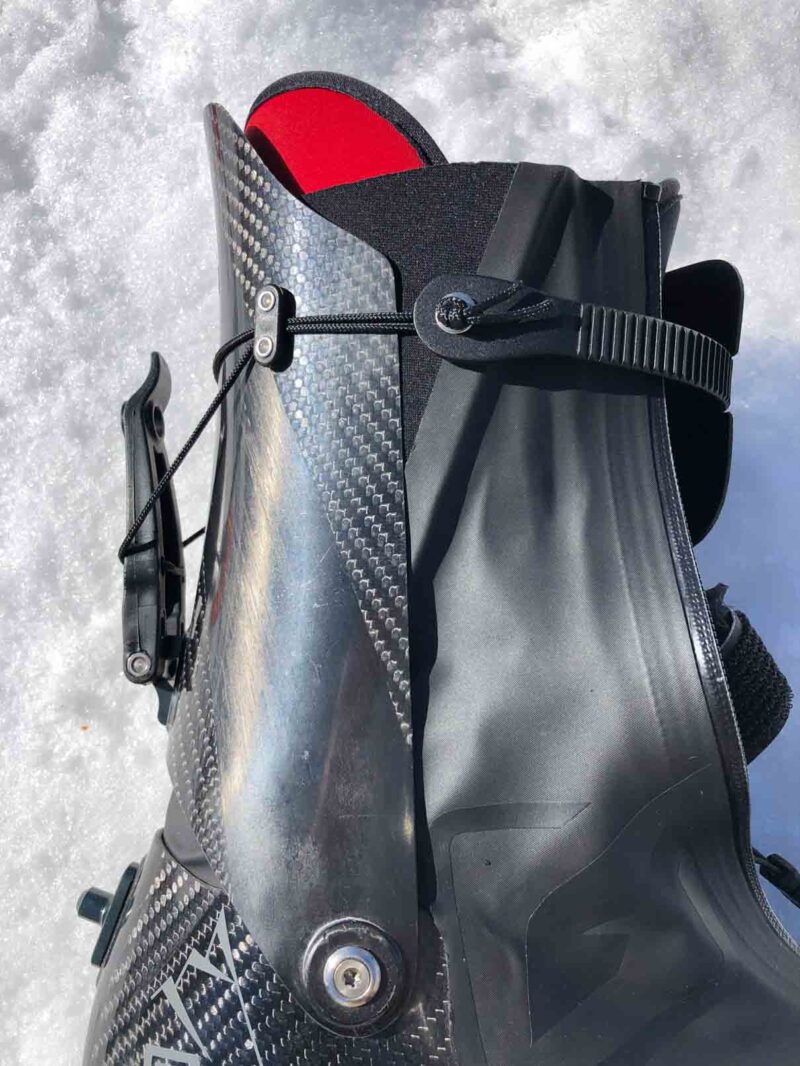
With the Gignoux Black, most pressure points are transmitted at lightning speed, powerfully. It’s slightly less effective than the Gignoux Mountain but still of a high level. The articulated lever, assisted by a cord, allows for a quick, efficient switch from ski to walk mode without debate.
The range of motion uphill on this boot has been described as “extraordinary”, and it truly is excellent. You walk as if wearing a pair of trail running shoes. Ascending, it’s simply astounding. When you want to switch the boot to downhill mode, once again, the operation is done in a fraction of a second.
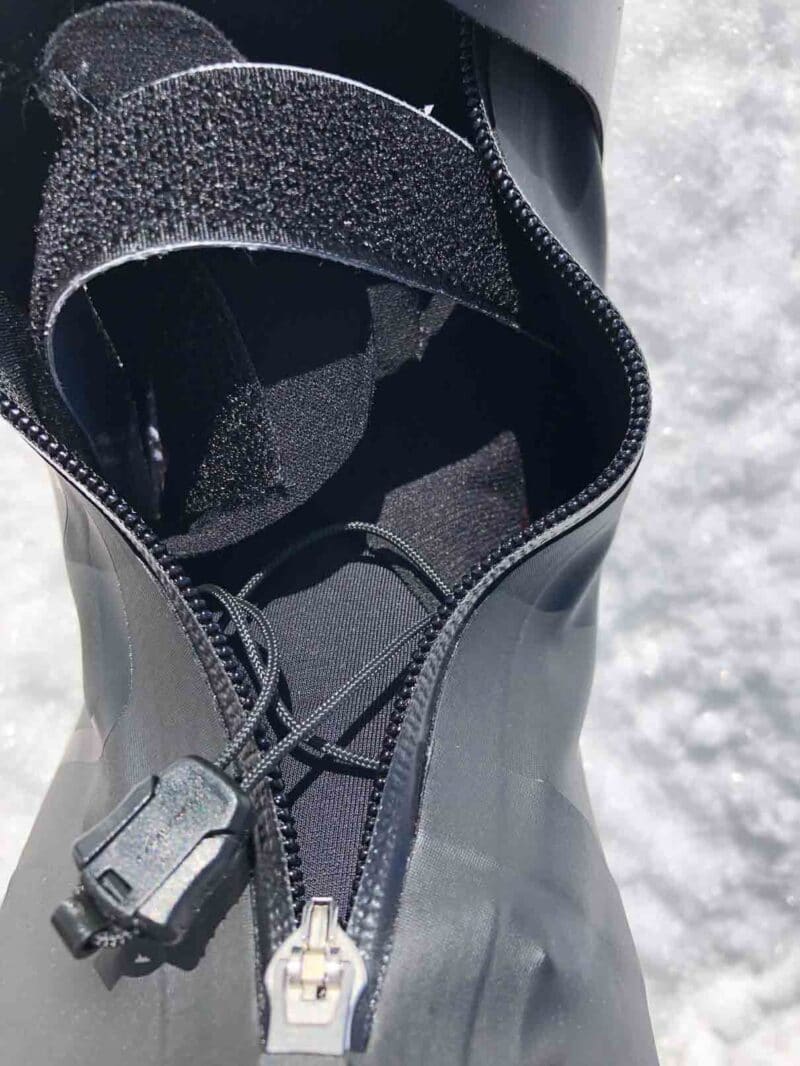
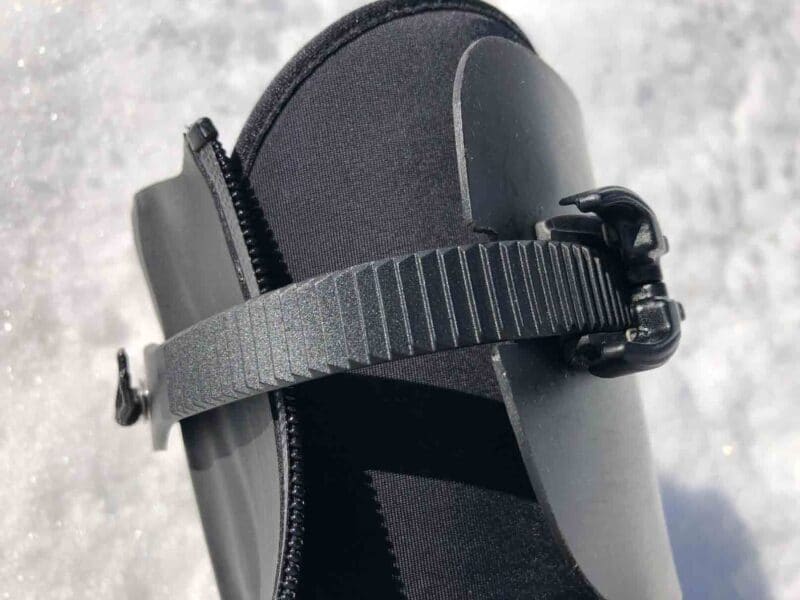
The top of the collar is held by a small hook. The system is very minimalist but effective. The closure is tight, and all lateral energy transmissions are very good. Be careful to position the closure zipper slider properly. It can press against the edge of the tibia and create a pressure point when tightening the hook.
The same closure system as the Gignoux Mountain is found here: there’s both Velcro, a strap, and a Quicklace. In the entire forefoot area, the fit is less secure. Consequently, there’s fairly good comfort, and the foot can breathe. Wide feet fare better. Note, the liner is very thin, so one must carefully choose the thickness of their sock and be clear about the width of their metatarsals.
During forward/backward flexion, the tibia is quickly impacted. Was our morphology in this area not compatible with the Gignoux Black? This needs to be verified and cross-referenced with other user experiences… Could the top of the liner be made more comfortable? Or should the height of the collar be reduced at the front?
This Gignoux Black is highly waterproof, and like the Gignoux Mountain, there’s a tendency to sweat inside: a consequence of being 100% carbon?
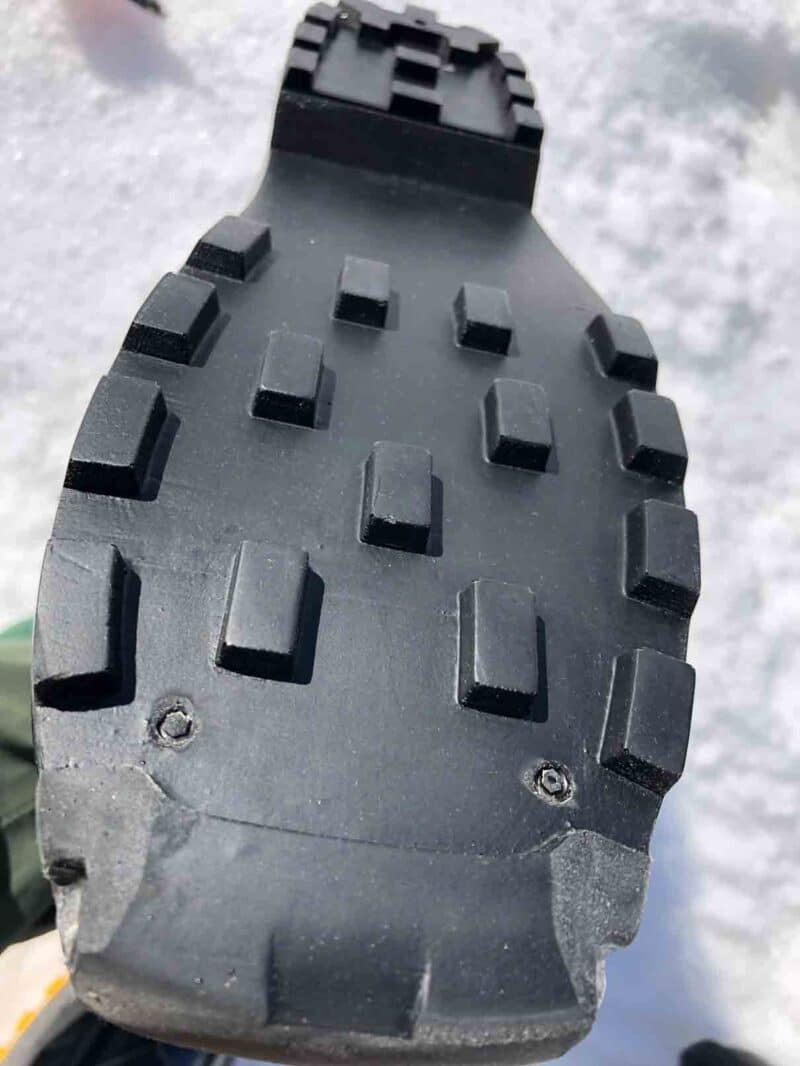
The sole of the Gignoux Black is very low. If using touring bindings with ski brakes, the sole sometimes struggles to retract them so the rear binding can engage. However, typically the Gignoux Black isn’t used with this type of binding.
Undoubtedly, it’s an extremely exclusive product, primarily targeted at “racing” despite Pierre Gignoux presenting it as versatile. The downside concerns direct tibial support.
The low-tech inserts enter very easily because the sole is laterally recessed to facilitate entry, which is very practical compared to other boots.
In summary: the weight and rigidity are exceptional. The transition from ascent to descent is ultra-fast and smooth. It’s also a boot with a “prototype” aspect, with a cord, pulleys, rivets… Anyway, for performance, it’s an essential boot, albeit at a very high price.

We used this equipment over a long period of time
These are our thoughts after intensive use:
Receive your answers by mail. Do you have a particular question concerning the design, use, durability or other about a tested product? We will answer your question personally.